
Breakdown #3: Skeeter Davis
Every month I break down a different recording of “Silver Threads and Golden Needles” for your enjoyment (and mine)

A Rebel With A Cause In Jesus
A bit of background:
The two red welts that appeared on my ankle late this week reminded me that spring is in the rear-view mirror. Many consider Memorial Day weekend to be the unofficial start of summer. I, however, have had the long-standing opinion that it is the first mosquito bite that marks the beginning of the sunny season. As pesky as these blood sucking insects are, they have a trailblazing namesake in country music. Skeeter Davis.
From Kentucky sweetheart to shunned Opry star, Skeeter Davis has had quite the career.
Born Mary Francis Penick, the farm girl was given the nickname ’Skeeter’ by her grandfather for her excitable energy. She picked up the last name, Davis, from her school friend Betty Jack Davis. The two formed a country duo and billed themselves as The Davis Sisters. After an unsuccessful stint with Fortune Records, Betty Jack and Skeeter traveled to New York to find a new label. The duo caught the attention of RCA Victor executive Steve Sholes [yes, the Steve Sholes who later signed Elvis], who sent them down to Nashville to audition for Chet Atkins and Eddy Arnolds. Knocking both Atkins and Arnolds off their feet in a hotel room, they were signed on the spot. The Davis Sisters Bent note harmonies, with an eery similarity to a pedal steel guitar, became a hallmark of their sound. They had an overnight hit with the song “I Forgot More Than You’ll Ever Know” in 1953, with Atkins on guitar. However, their success was short-lived. While on tour that year, the duo were in a car accident that killed Betty Jack at the ripe age of 21 and severely injured Skeeter at the age of 22. Their early recordings had an immense influence on many musicians, most notably on the sound of another popular sibling duo, The Everly Brothers.
Skeeter would eventually pursue a solo career and continue under the wing of Atkins at RCA. In her 15 years with RCA, she became one of their best-selling country artists, producing a vast catalogue of works. From Buddy Holly to Flatt and Scruggs, Skeeter sung it all. And always with cadence that danced between pop and country. This blurred line between pop and country wasn’t just in the sound of Skeeter’s voice but also in the production techniques utilized by Atkins.
Atkins, alongside with the Nashville A-team, are credited with the sound that emerged in opposition to the honky-tonk and hillbilly music that had dominated the country genre. It was known as the Nashville Sound. Whenever Atkins was asked to explain the Nashville Sound, he would jangle change and explain, “It’s the sound of money.” It is a crass, but still rather accurate description of the subgenre. Listeners can easily identify a song from the Nashville sound, as the recordings are often highly produced and polished.
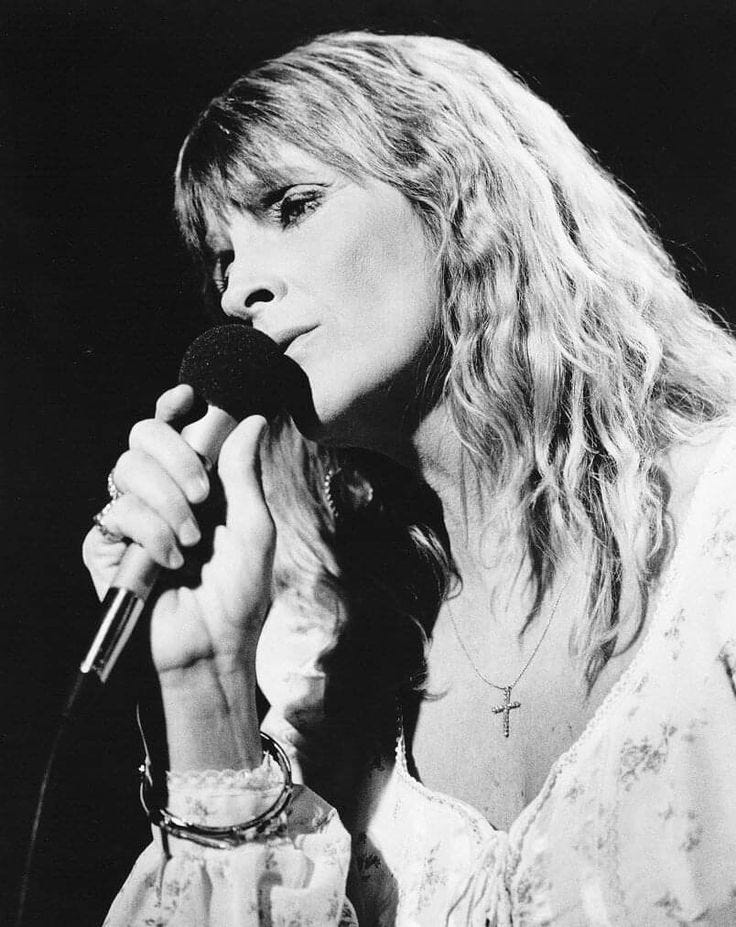
With all the sweet innocence Skeeter projected in her music, she wasn’t one to shy away from trouble. Bassist Chris Hillman noted that when The Byrds performed at The Opry in 1968 to a less than enthusiastic crowd, Skeeter was one of their few supporters that night, with her remarking, “You Byrds, don't be afraid of these people; they're just not caught up yet." In 1973, after speaking out against the arrest of a group of bellbottomed Pentecostals in Nashville, Skeeter was banned from performing at the Opry for nearly 15 months. A year after the Opry incident, Skeeter left RCA. After experiencing a brief career lull in the late seventies, Skeeter made a comeback by collaborating with her then husband, bassist Joey Sampino, and his band NRBQ on “She Sings, They Play.”
So, What’s So Special About This Version?
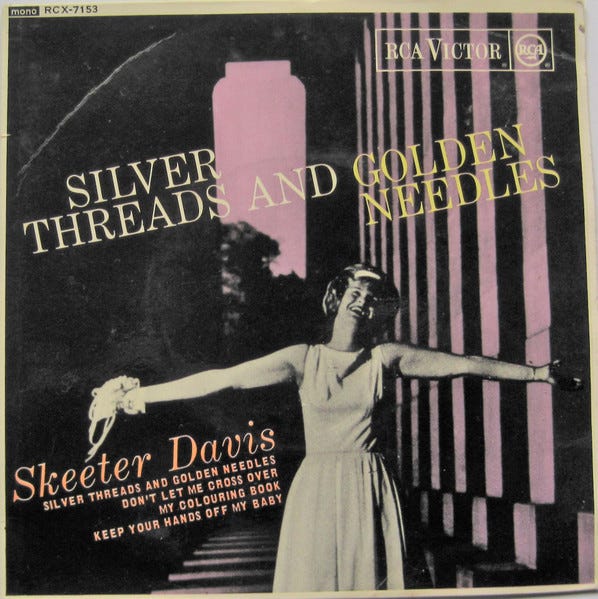
Silver Threads and Golden Needles appears as the second song on Skeeters fourth album, “The End of the World,” taken from her hit song of the same name released in March of 1963. Lyrically, the song follows the anglicized version recorded by The Springfields.
In the UK that same year, RCA put out an EP with “Silver Threads and Golden Needles” as the title track, hoping it would land with an audience that enjoyed The Springfields. The UK EP also featured the Gerry Goffin and Carole King-penned song “Keep Your Hands Off My Baby," Penny Jay’s country hit “Don’t Let Me Cross Over," and the pre-cabaret Kander and Ebb song Barbra Streisand performed on The Ed Sullivan Show in 1962, “My Coloring Book.”
When Atkins served as producer, her songs often seemed to mirror the sound of the Davis Sisters, with multitrack production techniques imitating a distant duet. A wise but heart wrenching choice. It is this very technique that makes, “The End Of The World," about losing a loved one, all the more haunting. And it can be heard on this version of the song as well. It’s worth noting that Anita Kerr, who is credited with arranging some of the most important “oohs” and “ahhs” recorded in Nashville, produced this version alongside Atkins. With Skeeters mellow syrupy vocals, Atkins distant velvet guitar licks, and airy orchestral strings listeners are treated to a waxed and shiny edition of “Silver Threads and Golden Needles”. It’s just the right balance of country and pop.
Silver Threads And Golden Needles Lyrics
(Skeeter Davis Version)
I don’t want your lonely mansion
With a tear in every room
All I want’s the love you promised
Beneath the haloed moon
But you think I should be happy
With your money and your name
And hide myself in sorrow
While you play your cheating game
Silver threads and golden needles
Cannot mend this heart of mine
And I dare not drown my sorrow
In the warm glow of your wine
But you think I should bey happy
With your money and your name
And hide myself in sorrow
While you play your cheating game
Silver threads and golden needles
Cannot mend this heart of mine
And I dare not drown my sorrow
In the warm glow of your wine
You can’t buy my love with money
For I never was that kind
Silver threads and golden needles
Cannot mend this heart of mine
Silver threads and golden needles
Cannot mend this heart of mine
Great article! Well done.